Screen Printing vs Embroidery vs DTG: How to Choose the Right Decoration Method for Your Project
You’ve got a design in mind and a deadline on the calendar. Maybe it’s 200 tees for a company event, embroidered polos for your sales team, or a small run of photorealistic hoodies for a product launch. The question isn’t if you should customize apparel — it’s how.
Choosing between screen printing, embroidery, and direct-to-garment (DTG) printing is one of the most important decisions you’ll make before placing a custom apparel order. The wrong choice can mean faded logos after a few washes, blown budgets on small runs, or designs that don’t pop the way you imagined.
At EG Threads, we work with all three methods — plus sublimation — every single day. We’ve seen what works, what doesn’t, and where each technique truly shines. This guide breaks it all down so you can order with confidence.
What Is Screen Printing?
Screen printing is the tried-and-true workhorse of the custom apparel industry. The process uses a mesh stencil (called a “screen”) to push ink directly onto fabric, one color at a time. Each color in your design requires its own screen, which is why this method is most efficient when you’re printing large quantities with a limited color palette.
At EG Threads, we can imprint up to 12 colors, and most screen printing orders ship in just 5 days.
When Screen Printing Is Your Best Bet
Screen printing is the go-to choice when your project checks these boxes:
- Large orders (24+ pieces). The more you print, the lower your cost per unit. Screen printing becomes significantly more affordable at scale because the upfront screen setup cost gets spread across every piece.
- Designs with 1–12 bold, solid colors. Think crisp logos, block lettering, team names, and clean graphic elements. Screen printing delivers incredibly vibrant, opaque color that sits on top of the fabric and really stands out.
- T-shirts, sweatshirts, and tote bags. These are the bread and butter of screen printing. The ink bonds beautifully with cotton and cotton-blend fabrics.
- Durability is a priority. A properly screen-printed design can withstand hundreds of wash cycles without significant fading or cracking.
Where Screen Printing Has Limitations
Screen printing isn’t ideal for every project. Because each color requires a separate screen, designs with complex gradients, photographs, or dozens of colors become expensive and impractical. It also has higher minimums than other methods — if you only need five shirts, the setup costs won’t make financial sense.
Bottom line: If you need 24 or more pieces with a clean, bold design, screen printing delivers the best combination of quality, durability, and value. It remains the most popular decoration method in the industry for good reason.
What Is Embroidery?
Embroidery uses computerized machines to stitch your design directly into the fabric using colored thread. The result is a raised, textured finish that looks and feels premium — there’s a reason embroidery has been the gold standard for corporate apparel, uniforms, and upscale branding for decades.
At EG Threads, we offer embroidery with up to 15 colors, low minimums, and orders that ship in 5 days.
When Embroidery Is Your Best Bet
Embroidery is the right call when your project needs a polished, professional edge:
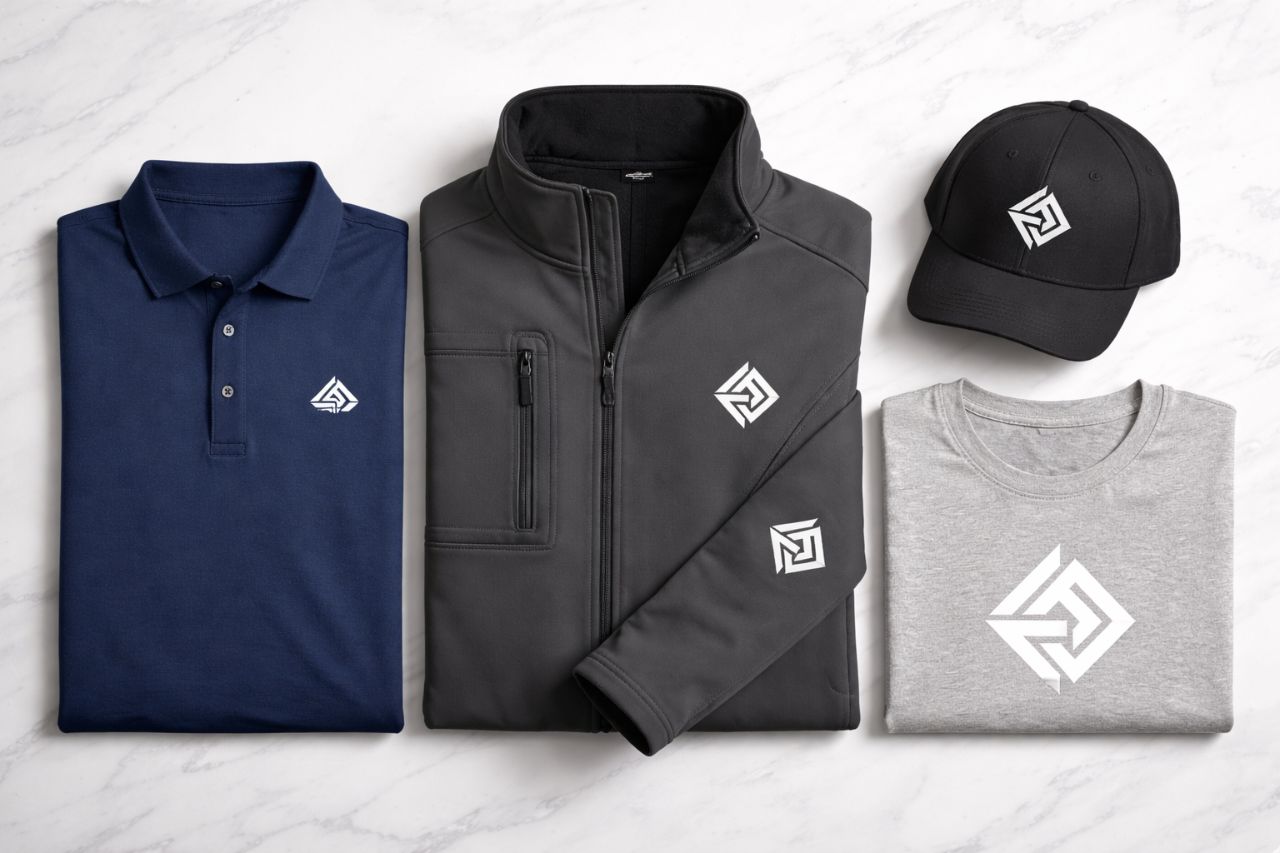
- Corporate uniforms, polos, and button-downs. Nothing says “we take our brand seriously” like a cleanly stitched logo on a quality polo. Embroidery elevates everyday workwear into a brand statement.
- Hats, caps, and beanies. Structured headwear and embroidery are a perfect match. The stitching holds up on curved surfaces and gives hats a retail-quality look that printing methods simply cannot replicate.
- Jackets and outerwear. Heavier fabrics like fleece, denim, and softshell are ideal candidates for embroidery. The thread integrates with the material and won’t crack or peel like some inks can on textured surfaces.
- Smaller, logo-focused designs. Embroidery excels with compact, clean designs — think chest logos, sleeve patches, and monograms. The recommended sweet spot is designs under about 10 inches in any direction.
- Maximum durability. Because the design is literally stitched into the fabric, it will last as long as the garment itself. Embroidered logos don’t fade, crack, or peel.
Where Embroidery Has Limitations
Embroidery is not the best method for large, full-coverage graphics or designs with fine photographic detail. Thread simply can’t reproduce the resolution that ink-based methods achieve. It also carries a one-time digitizing fee to convert your artwork into a stitch file — though this fee applies to all future orders of the same design as well.
Very large embroidered designs on lightweight fabrics like thin tees can feel stiff or heavy. It’s important to match the decoration size to the garment weight.
Bottom line: For professional branding on polos, hats, jackets, and uniforms, embroidery is unmatched. It communicates quality, lasts the lifetime of the garment, and gives your brand a tangible, premium feel.
What Is DTG (Direct-to-Garment) Printing?
DTG printing works like a high-end inkjet printer designed specifically for fabric. The machine sprays water-based ink directly into the fibers of the garment, producing a soft, smooth print with virtually unlimited colors. If your design includes photographs, complex gradients, or dozens of colors, DTG handles it effortlessly.
At EG Threads, DTG is ideal for lower quantity orders with intricate, photorealistic designs. Orders ship in 10 days.
When DTG Is Your Best Bet
DTG is the smart choice when flexibility and detail are your top priorities:
- Small quantities (1–23 pieces). There are no screens to set up, which means you can print a single shirt without paying expensive setup fees. This makes DTG perfect for samples, prototypes, small events, or personalized gifts.
- Photorealistic or highly detailed designs. Full-color photographs, watercolor illustrations, intricate artwork with dozens of colors — DTG reproduces them all with impressive clarity and a soft hand feel.
- Quick turnarounds on complex designs. Because there’s no physical screen creation involved, DTG jobs can move from artwork to finished product faster when the design is complex.
- Cotton and cotton-blend garments. DTG inks absorb best into natural fibers, delivering the richest color saturation and softest feel on cotton tees, hoodies, and sweatshirts.
Where DTG Has Limitations
DTG prints soak into the fibers rather than sitting on top like screen printing ink. This produces a softer feel, but the colors may not appear as vibrant or opaque on dark garments, even with a white underbase layer. DTG also isn’t ideal for performance polyester fabrics or for orders where you need hundreds of the same design — that’s where screen printing’s cost efficiency takes over.
Bottom line: DTG is the most versatile method for small runs and complex designs. If you need fewer than 24 pieces and your artwork has lots of detail or color variety, DTG gives you retail-quality results without minimum order headaches.
Screen Printing vs Embroidery vs DTG: Quick Comparison
| Factor | Screen Printing | Embroidery | DTG Printing |
|---|---|---|---|
| Best for | Large orders, bold designs | Professional branding, headwear | Small runs, detailed artwork |
| Ideal order size | 24+ pieces | Any quantity | 1–23 pieces |
| Color range | Up to 12 colors | Up to 15 thread colors | Unlimited (full CMYK) |
| Durability | Excellent | Outstanding | Very good |
| Feel on fabric | Smooth, sits on top of fabric | Raised, textured, premium | Soft, soaks into fibers |
| Best garments | Tees, sweats, totes | Polos, hats, jackets, uniforms | Cotton tees, hoodies |
| Typical turnaround | ~5 days at EG Threads | ~5 days at EG Threads | ~10 days at EG Threads |
| Cost efficiency | Best at scale (24+) | Premium per piece, great ROI | Best for small quantities |
What About Sublimation?
If your project involves polyester performance wear, athletic jerseys, or all-over prints, sublimation deserves a look. This method uses heat to turn ink into gas that permanently bonds with polyester fibers, producing prints that are incredibly vibrant, won’t crack or peel, and feel like they’re part of the fabric itself.
At EG Threads, we offer full sublimation services including cut-and-sew projects for custom athletic uniforms, gaiters, masks, socks, and specialty items. If you’re working with polyester and want edge-to-edge color, sublimation is the way to go.
How to Choose: A Simple Decision Framework
Still not sure which decoration method is right for your project? Answer these three questions:
1. How many pieces do I need?
If you need 24 or more of the same design, start with screen printing. For smaller runs, DTG or embroidery will be more cost-effective depending on the design and garment type.
2. What does my design look like?
Bold logos and limited colors lean toward screen printing or embroidery. Photographs, gradients, and complex multi-color artwork point toward DTG. Simple, clean logos on professional garments are embroidery territory.
3. What type of garment am I decorating?
Cotton tees and hoodies work great with screen printing or DTG. Polos, hats, and jackets are embroidery’s domain. Polyester performance wear calls for sublimation.
Frequently Asked Questions
What is the difference between screen printing and embroidery?
Screen printing applies ink onto fabric through a mesh stencil, creating a smooth, flat design with vibrant colors. Embroidery stitches thread directly into the fabric, producing a raised, textured finish. Screen printing is better for large orders and colorful graphics, while embroidery is better for logos on polos, hats, and professional uniforms.
Is DTG printing better than screen printing?
Neither is universally better — they serve different needs. DTG printing is better for small orders (under 24 pieces) and designs with many colors or photorealistic detail. Screen printing is better for large orders (24+ pieces) with simple, bold designs because it offers lower cost per unit at scale and superior color vibrancy.
How long does screen printing last on a shirt?
A properly screen-printed shirt can withstand hundreds of wash cycles without significant fading or cracking. To maximize longevity, wash garments inside out in cold water and avoid high-heat drying.
Which decoration method is best for company uniforms?
Embroidery is typically the best choice for company uniforms. It produces a professional, polished appearance that holds up to daily wear and repeated washing. Many businesses use embroidered polos, button-downs, and jackets for their teams because the stitched logos look premium and last the lifetime of the garment.
Can you combine screen printing and embroidery on the same garment?
Yes. Many organizations use a hybrid approach — embroidered logos on the chest or sleeve for a premium look, combined with screen-printed designs on the back for visual impact at lower cost. EG Threads can help you plan a combination approach that balances quality and budget.
What is sublimation printing and when should I use it?
Sublimation uses heat to bond ink permanently with polyester fibers, producing vibrant, all-over prints that won’t crack, peel, or fade. Use sublimation when you need edge-to-edge color on polyester garments like athletic jerseys, performance wear, or specialty items.
Why EG Threads Makes This Easy
Here’s the truth: you shouldn’t have to become an expert in decoration methods just to get great custom apparel. That’s our job.
At EG Threads, we offer screen printing, embroidery, DTG, and sublimation — all under one roof. Our team will look at your artwork, your garment choices, your quantities, and your timeline, then recommend the method (or combination of methods) that delivers the best result for your specific project.
We’ve built our reputation on a hassle-free process, consistent quality, and honest guidance. No upselling you on a method you don’t need. No surprises when your order arrives. Just great decorated apparel, delivered on time, every time.
Ready to get started? Contact EG Threads today for a free consultation on you